
Land Acknowledgement

We acknowledge that Eau Claire rests on the traditional homelands of the Anishinaabe (Ojibwe) and Ho-Chunk peoples. For generations, these communities lived, gathered, and cared for the lands and waters of the Chippewa Valley. Visit Eau Claire honors their past and looks forward to supporting a future rooted in respect and understanding.

Honoring Indigenous Heritage in Eau Claire

Gathering of the Waters Powwow

Each year, the Gathering of the Waters Powwow brings together the community to honor Indigenous culture, tradition, and resilience. This annual celebration features drumming, dance specials, artist workshops, vendors, food trucks, and a health fair. The powerful Grand Entry welcomes dancers, singers, and artists from across the region, filling the day with vibrant song, movement, and storytelling. Open to all, the powwow is an opportunity to learn, connect, and celebrate the enduring traditions of Indigenous nations. This year's event is scheduled for September 20, 2025.


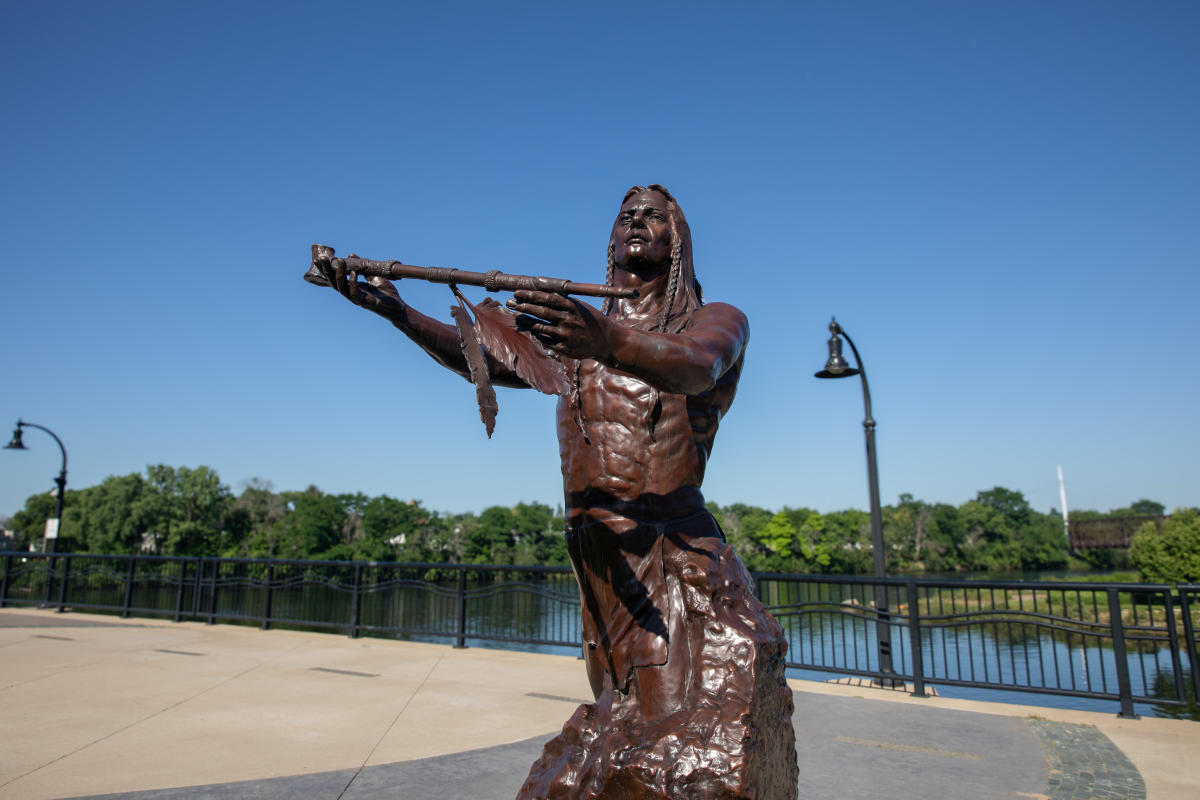
A sculpture of a Native American on Haymarket Plaza near the confluence


Nature's Keeper by Bobbie Carlyle

Nature’s Keeper, a bronze sculpture by renowned artist Bobbie Carlyle, depicts a Native American chief offering a peace pipe to a world in need of healing. The piece speaks to universal themes of wisdom, reconciliation, and respect for the natural world, inviting reflection on how communities can come together in times of challenge. Carlyle, known for her powerful and symbolic bronze works, created this piece as part of her broader exploration of humanity, spirit, and resilience.

Set in Haymarket Plaza at the confluence of the Chippewa and Eau Claire Rivers, Nature’s Keeper stands as both an artistic landmark and a place of contemplation. Here, where two rivers meet, the sculpture reminds us of the enduring call for peace, harmony, and connection between people and the land.


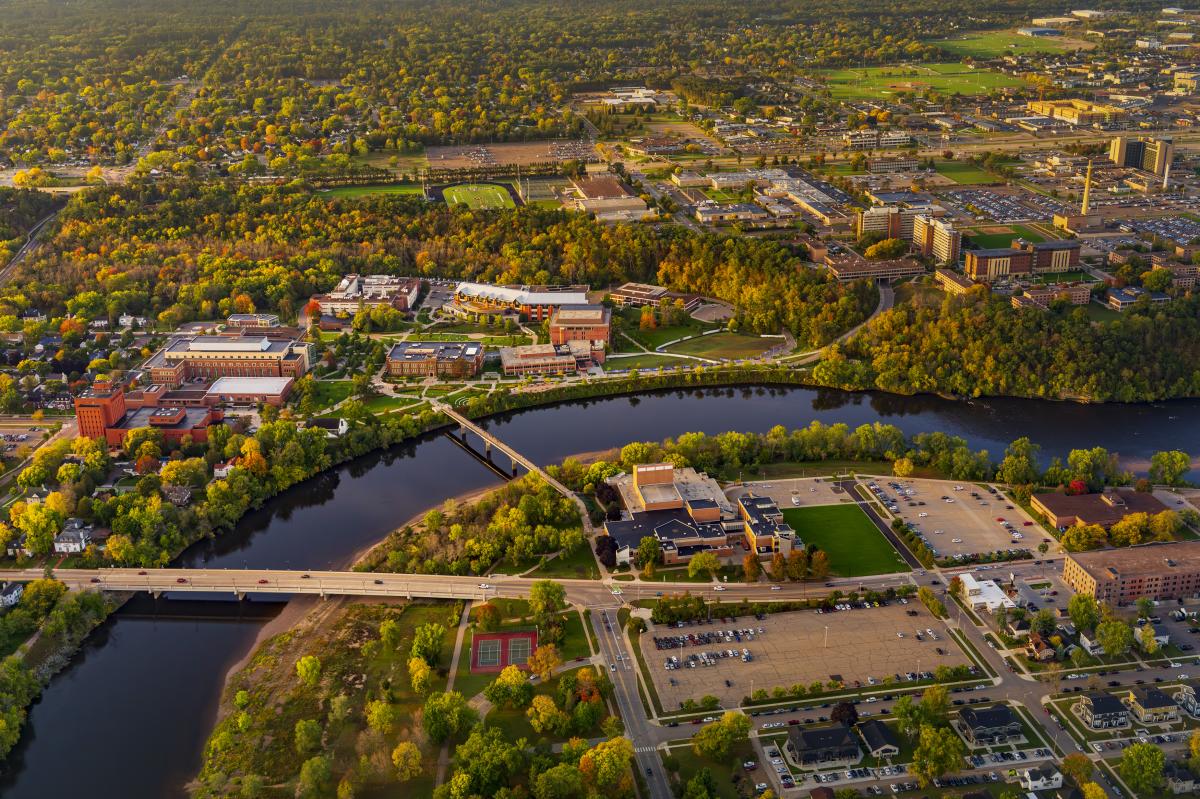
An aerial view of the UW-Eau Claire campus in the fall

Photo Credit: UW-Eau Claire

The University of Wisconsin-Eau Claire Seal

The University Seal of UW-Eau Claire was adopted in 1966 and remains an enduring symbol of the university’s values—especially the ideals of excellence, community, and shared purpose. It was designed by art professor Kenneth Campbell, who incorporated a central image of the Council Oak tree alongside the word “Excellence.”

The Council Oak itself holds deep significance. The original Council Oak stood on a sacred site of gathering, where the Ojibwe and Dakota nations—along with the Ho-Chunk, Menominee, Potawatomi, and others—met to share knowledge and resolve differences peacefully. After the original tree was lost, a new Council Oak was planted and dedicated in 1990 by elders from the Ojibwe and Ho-Chunk nations.

UW-Eau Claire recognizes the Council Oak as a symbol not just of history, but of place: a reminder that the campus stands on ancestral and sacred lands of Indigenous Peoples, past and present.

For more information about the University Seal, visit the link here.

Want to learn more?

For more information about the history of Indigenous peoples in this region, the Chippewa Valley Museum offers exhibits and resources that share their stories and traditions. Visit the museum on your trip to Eau Claire!

You May Also Like